
Article
Richard Branson: On Google, Your Posts Reach People Who Don’t Follow You
Richard Branson’s Google results show how social posts reach people who don’t follow you—and why context matters for executive reputation management.
Read article →Discreet support. Clear direction.
Online reputation
management.
Protect what
people see.
Your reputation shapes every first impression. We help businesses, brands and individuals understand what’s online—and move forward with a clear, evidence-led plan.
Resource library
Evidence-led explanations for understanding reputation risks, comparing approaches and choosing responsible next steps.
Article
Richard Branson’s Google results show how social posts reach people who don’t follow you—and why context matters for executive reputation management.
Read article →
Article
An analysis of how LVMH, Wikipedia, financial media, video and public curiosity shape Bernard Arnault’s online reputation—and why economic influence does not equal control of Google.
Read article →
Article
Search engine optimization and online reputation management are related, but they are not the same service. SEO helps people find relevant pages. Online reputation management (ORM) helps a business, brand, executive, or professional understand and improve what people find—and the conclusions they draw from it.
Read article →
Article
Online reputation management can cost from roughly $100 per month for basic monitoring tools to $10,000 or more per month for a broad, actively managed program. Public estimates are wide because they often combine fundamentally different services: software subscriptions, review workflows, search-result work, content development, public-relations support, and crisis response. A WebFX survey places most reported monthly spend between $100 and $10,000, while another agency guide gives a narrower typical range for many small-business and individual engagements.[1] [2]
Read article →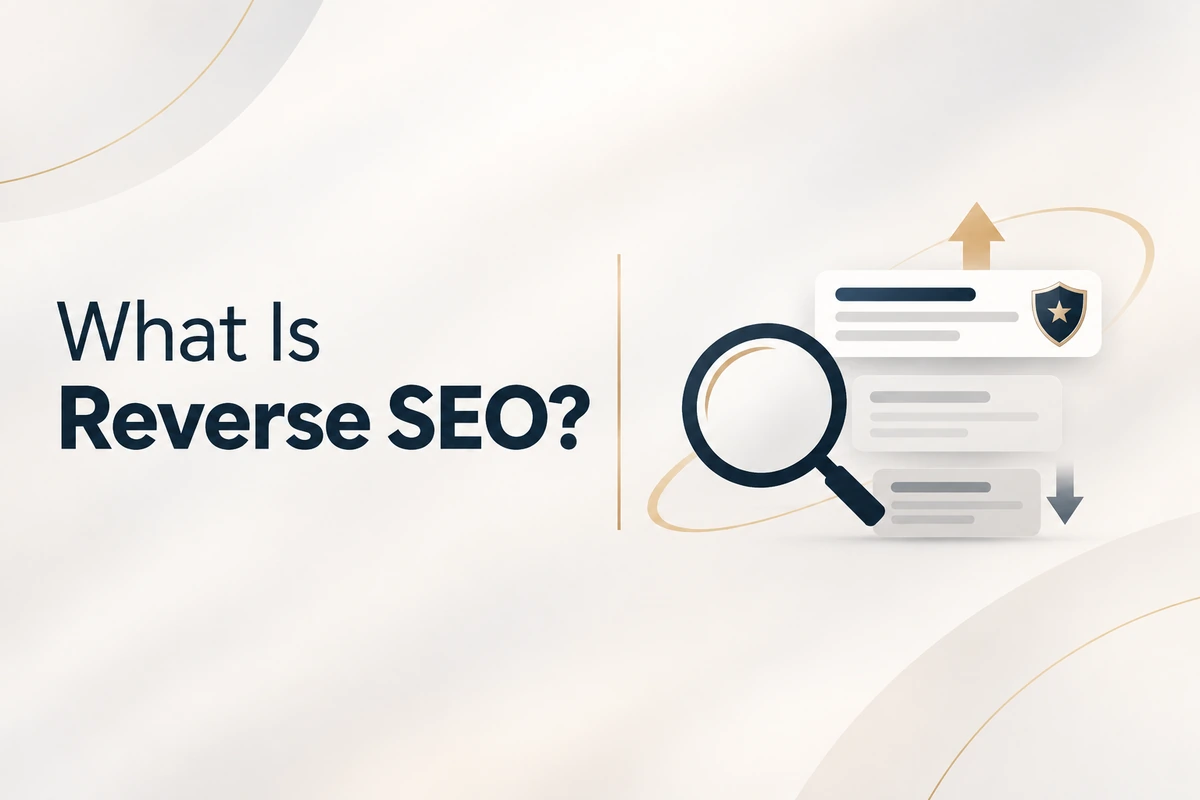
Article
When someone searches for your company, brand or name, the results become part of the first impression they form. If an outdated article, an isolated complaint or a misleading third-party page ranks prominently, it can shape that impression before a visitor reaches your own website. Reverse SEO is a search reputation management approach designed to address that visibility problem responsibly.
Read article →
Article
Online reputation management (ORM) is the ongoing practice of monitoring, understanding, and improving the information people find and share about a business or person online. It covers search results, reviews, social media, news coverage, directory listings, public profiles, and other digital content that can shape trust.
Read article →Send us the affected name, market, and non-confidential URLs. We will outline the appropriate first assessment.